Why Junk Drawers Don’t Work and What To Do Instead
Almost every home has one. A drawer stuffed with takeout menus, dried-up pens, loose batteries and that one mysterious key no one dares to throw away. We call it the junk drawer.
It sounds harmless enough, after all, it’s just one drawer. But here’s the thing: the junk drawer is sneaky. It becomes a tiny black hole where decisions go to die. Instead of solving clutter, it hides it. And over time, that little drawer can quietly train your brain to accept chaos as “normal.”
Why the Junk Drawer Doesn’t Work
The problem isn’t the drawer, it’s the label. When you call something a “junk drawer,” you give yourself permission to treat it as a dumping ground. Anything without a home? Toss it in. Too tired to think? Shove it in. Out of sight, out of mind.
But clutter doesn’t disappear just because you close a drawer. It lingers, creating micro-frustrations: wasted time hunting for scissors, the annoyance of finding 12 bread twist ties but no tape, the guilt of realizing you don’t actually need half of what’s inside.
What to Do Instead
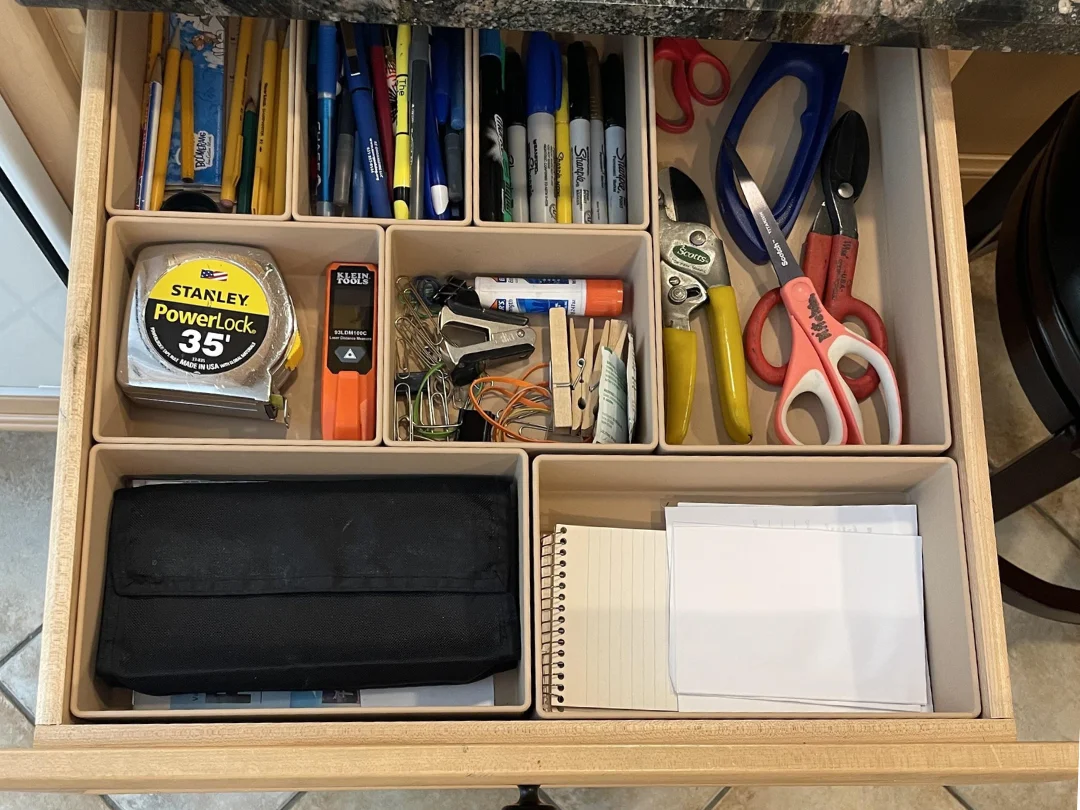
The good news: you don’t have to live with a junk drawer. What you need is a utility drawer, a space for the truly useful, not the truly random. Here’s how to get there:
- Dump it out. Empty the drawer completely. Yes, all of it. (You’ll probably discover duplicates, broken items and things you forgot you owned.)
- Decide what belongs. Keep only the items you actually reach for in daily life: tape, scissors, pens that work, batteries, a notepad, spare keys you can identify.
- Give each item a zone. Use small boxes, drawer dividers or even repurposed containers to create simple categories. The goal is not perfection, it’s quick access.
- Relocate the extras. Coupons? Move them to your wallet or a folder. Takeout menus? Store digitally. Random tools? They belong with the actual tools. That mystery key? If it hasn’t been used in years, chances are, it never will be.
A Mindset Shift
Think of this as more than just reorganizing a drawer. It’s retraining your brain to reject the idea of “junk space.” Every item in your home deserves a decision: keep, donate, recycle or toss. When you create intentional homes for things, even tiny things, your space starts to feel calmer and more functional.
Try This Today
Open your junk drawer. Instead of sighing or shoving it shut, ask yourself: What if this drawer wasn’t for junk, but for tools that actually help my life run smoothly?
Decluttering isn’t about having less, it’s about making room for what matters. And yes, even one little drawer can make a surprisingly big difference.
“Outer order contributes to inner calm.” — Gretchen Rubin